

Welcome back to The Breakdown AI.
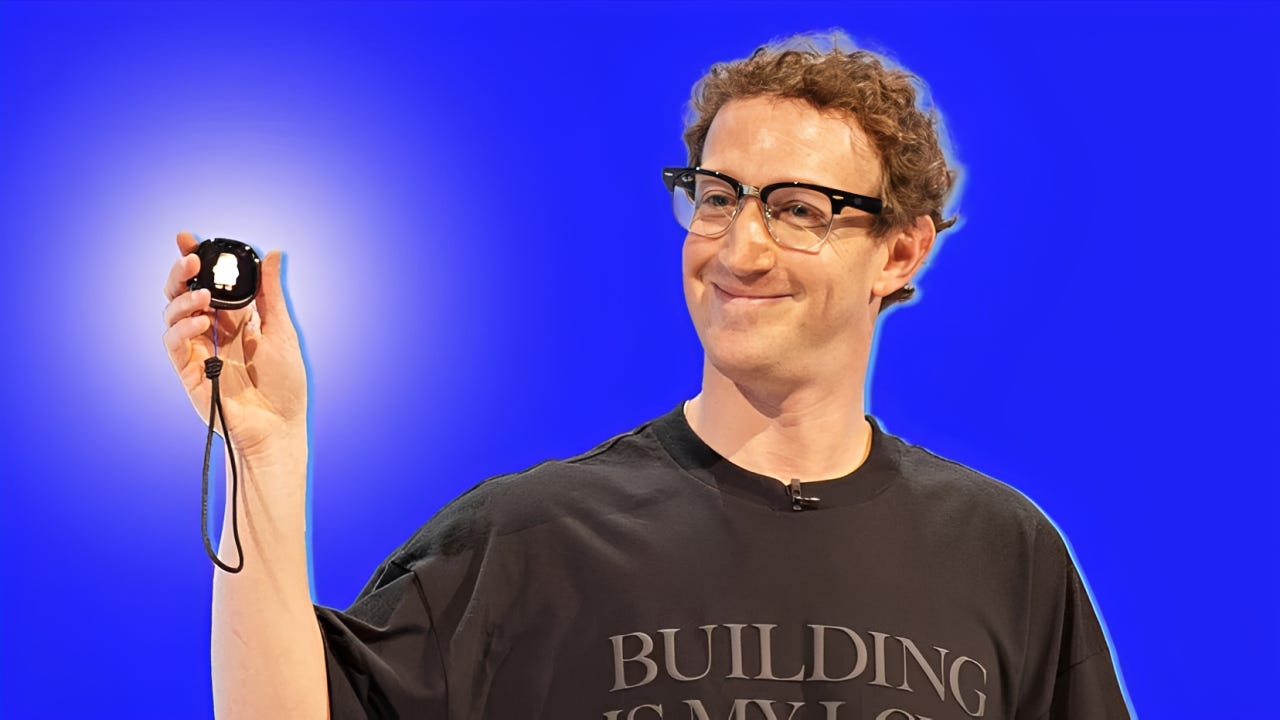
This week, I spent a good chunk of time listening to Mark Zuckerberg sit down for a deep dive on the future of personal intelligence and his latest work at Meta.
In this engaging conversation, Mark Zuckerberg sits down to share his evolving vision for the future, dropping major insights that hint at the transformative arrival of his latest project, Muse. As he reflects on his journey as a builder, he pulls back the curtain on how AI agents are poised to become our next essential digital companions.
It was a fascinating look into how he sees our daily lives changing as AI agents become a permanent part of our digital toolkit.
Since I know everyone is busy, I watched the full conversation so you do not have to.
Here are the five key takeaways that actually matter for the road ahead:
1. Personal AI is becoming an embodied companion
Mark wants Muse to feel friendly and cute, not like a scary robot.
By giving the AI a visual character and voice, he hopes to bridge the gap between complex machine intelligence and natural, everyday social interaction.
I find this shift toward embodiment to be a stroke of genius. We have spent years treating AI like a utility, but making it a personality changes our psychological relationship with it. It stops being a search bar and starts being a partner.
This is likely the most important bridge between Silicon Valley R&D and the living room. If you can make people smile when they talk to their technology, you have already won half the battle of adoption.
2. Privacy is built into the architecture
To solve the trust gap, Meta is moving beyond simple encryption. They are developing confidential virtual machines where not even Meta can access the agent’s contents, providing a level of security similar to what users already trust on WhatsApp.
Privacy has always been the Achilles’ heel for Meta, and I think Zuckerberg knows that Muse cannot succeed unless people feel truly safe. By architecting this at the virtual machine level, they are trying to prove that you can have super-intelligence without sacrificing your secrets.
Whether or not the public buys into this remains to be seen, but it is a clear recognition that the old era of data harvesting is dead. Moving forward, the most valuable currency in tech will be verifiable, absolute user privacy.
3. AI agents are evolving faster than holograms
While Zuckerberg initially bet on holograms becoming the primary way we interact with virtual spaces, the tech tree took a turn. Intelligent AI agents have arrived on the scene much faster, becoming the new anchor for his metaverse hardware.
This is a humble admission from a founder who has spent billions on the dream of the metaverse. It shows a founder who is willing to pivot his vision when reality moves faster than his blueprints.
I personally think this is a smart shift. AI is the software layer that makes the hardware actually worth wearing. By focusing on the agent first, he is ensuring the metaverse has a reason to exist rather than just being an empty room.
4. Avatars are a tool for self-expression
Instead of just creating a perfect mirror image of the user, Mark views avatars as a creative outlet. It is all about giving people the freedom to curate their digital presence, much like how we have been choosing profile photos for decades.
We have spent decades curating our identity through grids on Instagram, and avatars are just the next logical extension of that vanity. If we can control our appearance in the digital world, we will inevitably start experimenting with identities that are more fun or expressive than our daily reality.
It makes me wonder if we will eventually have a wardrobe of digital selves that we swap out depending on our mood or the people we are meeting. It is a playful take on the metaverse that I think many will embrace.
5. Hardware is the bridge to the future
The ultimate goal is to move AI off the screen and into your life.
Through smart glasses and advanced audio, Muse will be able to handle complex desktop tasks in the background while you remain fully present in the real world.
If he pulls this off, the smartphone era might finally be coming to a close.
Imagine having a super-intelligent assistant whispering in your ear, doing your spreadsheets while you are literally just grabbing a coffee.
This is the holy grail of tech (technology that disappears until you need it).
The transition from pocket-sized screens to wearable, ambient intelligence is going to be the defining shift of the next decade.
Ultimately, what stuck with me was Zuckerberg’s infectious obsession with building.
He is not just looking for the next product, he is trying to shape the fabric of how we interact with information and each other, and whether you are a fan of his past work or not, it is clear that he is all-in on this vision of a personal, embodied AI.
The next few years are going to be a wild ride, and I for one am excited to see how this all shakes out.
Full video here: