

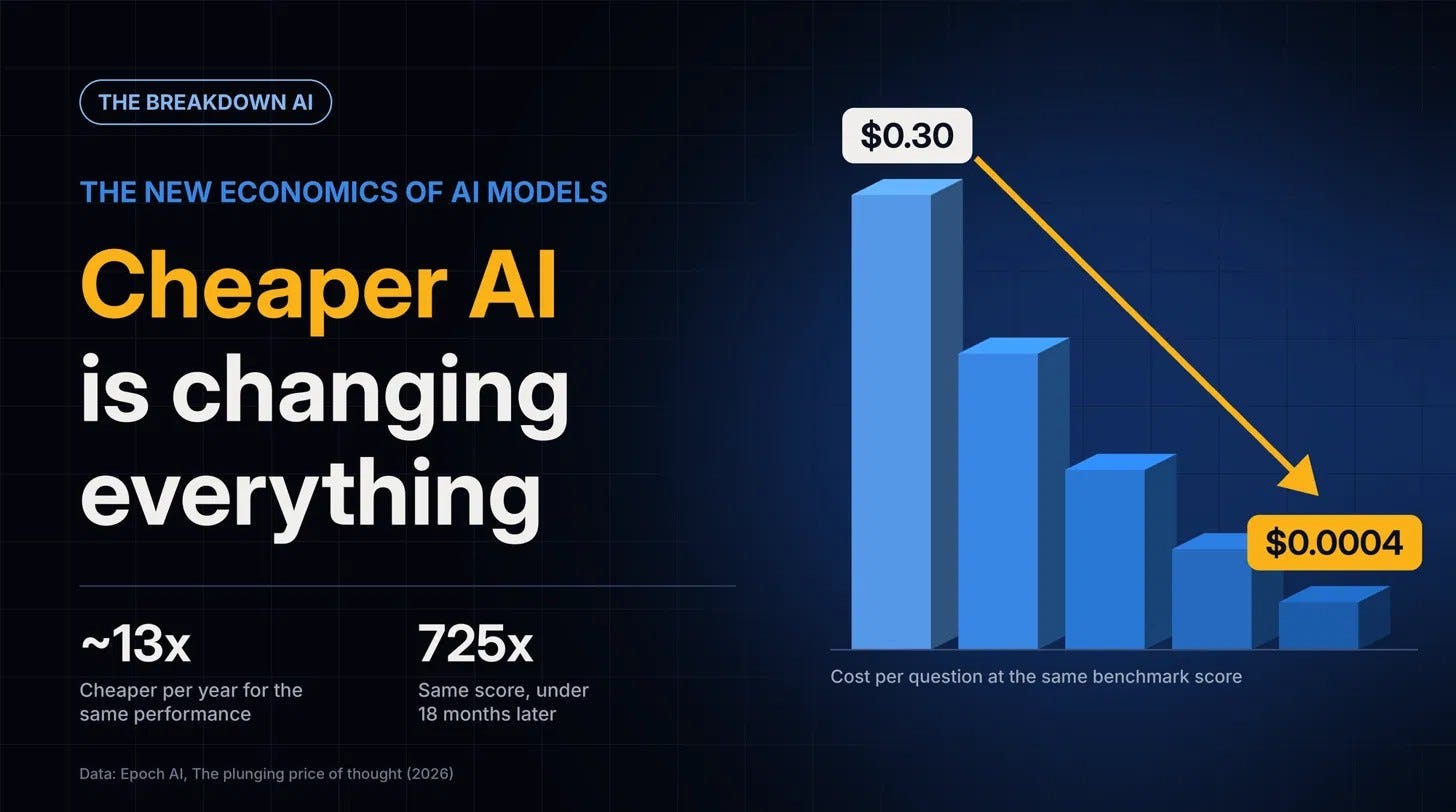
There’s something happening in the AI industry that deserves more attention.
The models are getting cheaper.
A task that might have required an expensive frontier model a year ago can increasingly be handled by a smaller, less expensive model. Developers have more options, API prices are becoming more competitive, and companies are finding ways to deliver AI features without spending as much on every request.
At first glance, this sounds like a straightforward win for everyone.
Developers spend less money. Startups can build products more cheaply. Users get access to more capable AI tools without necessarily paying more.
But there’s a business question underneath all of this.
If the cost of running AI keeps falling, how do companies actually make money from it?
Consider a startup that charges customers $20 a month for an AI-powered product. Every time a customer asks a question, uploads a document or runs an automated workflow, the startup may have to pay an AI provider to process that request.
The more customers use the product, the more the company spends.
If a handful of customers use the product heavily, those costs can eat into the money the startup makes from their subscriptions.
And if the company promises unlimited usage, things can get uncomfortable very quickly.
I want to look at how this business model is changing, why model prices keep moving, and what developers and everyday AI users should understand about the choices available to them.
Get in-depth industry analysis, practical AI playbooks, tested prompts, and guides to help you work, learn, and build with AI.
Inside you’ll find:
Why AI models are getting cheaper and what’s driving the price drops
How inference costs affect the profits of AI startups
Why model providers are competing so aggressively on price
When smaller models can do the job of more expensive frontier models
How AI subscriptions, usage limits and pricing models work
Practical ways developers can reduce their AI costs
A framework for choosing the right model based on cost, speed, quality and task complexity
Let’s begin.
1. Why the cost of using AI keeps falling
To understand what’s happening, we need to look at how AI companies charge developers.
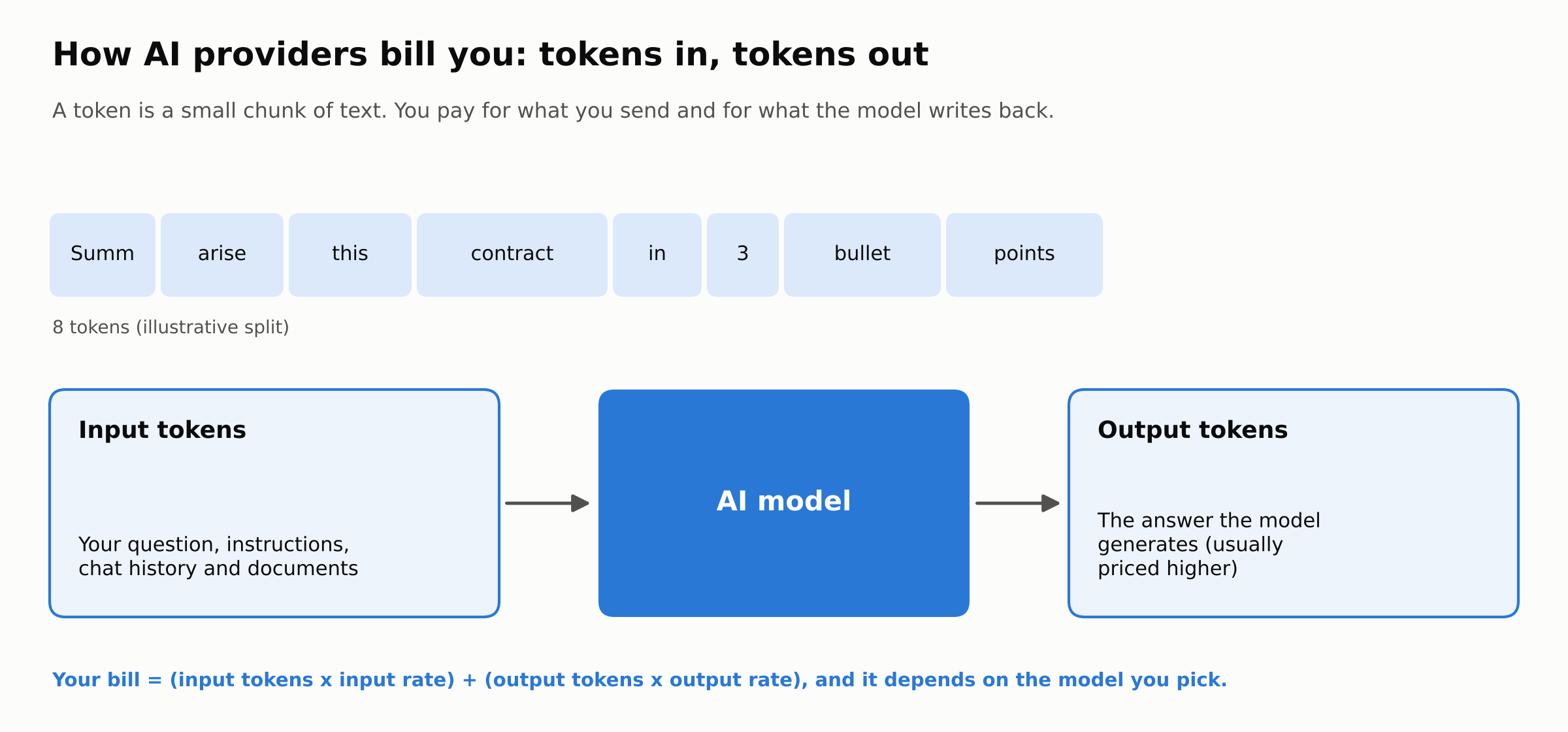
When a developer connects an application to an AI model through an API, the provider usually charges based on the number of tokens processed.
A token is a small unit of text. It can represent a word, part of a word, punctuation or other information the model processes.
There are two main categories of token usage.
Input tokens are the information sent to the model, including the user’s question, instructions, conversation history and documents.
Output tokens are the information the model generates in response.
Providers generally charge different rates for each.
This means a developer’s bill depends on how much information goes into the model, how much it generates, and which model is being used.
The interesting part is how quickly the price of obtaining a given level of AI performance has been falling.
In September 2026, research organisation Epoch AI published an analysis called The Plunging Price of Thought.
Its researchers estimated that the cost of achieving a given level of AI performance had fallen by approximately 47% per quarter over the previous three years.
That’s roughly a 13-fold reduction per year.
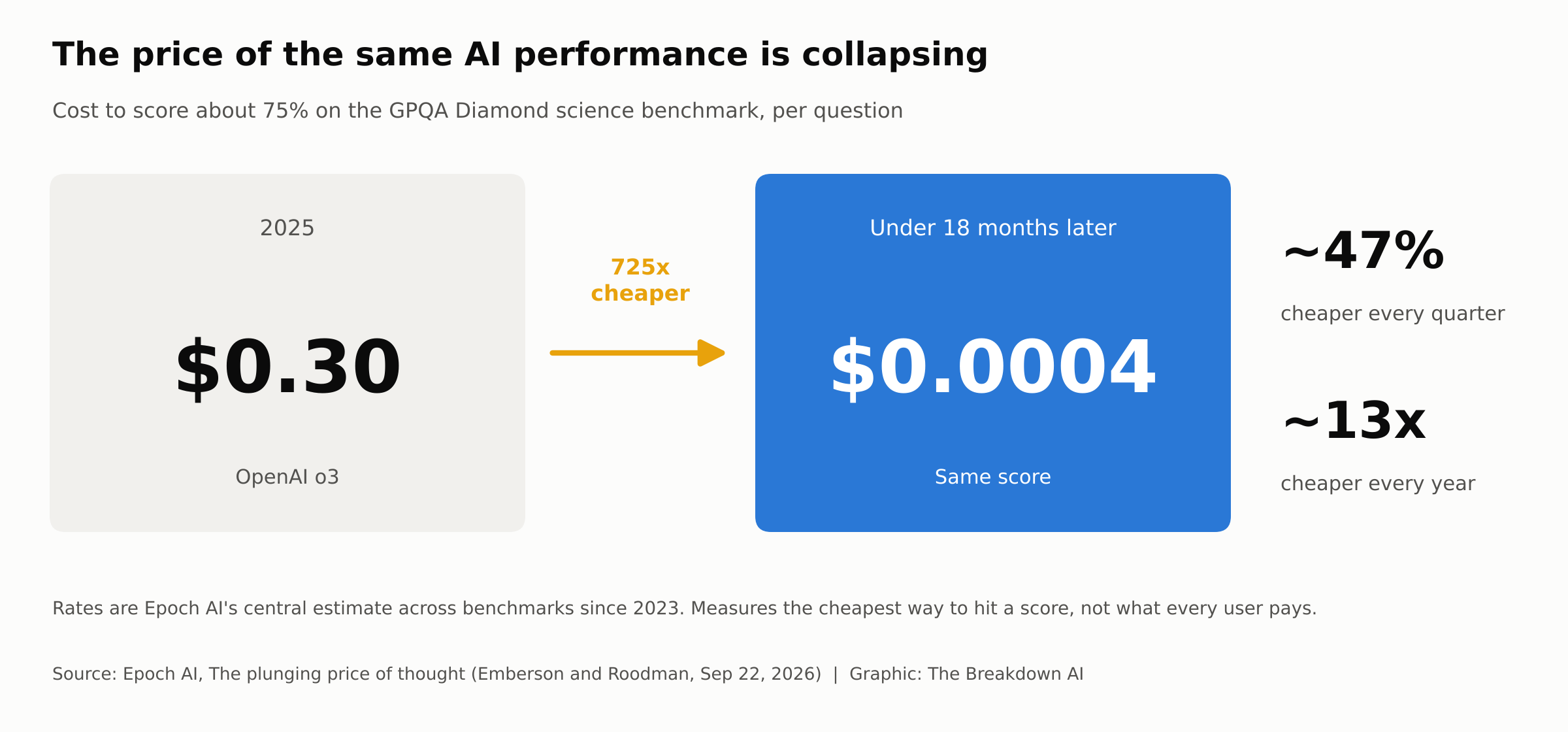
The researchers compared models based on the level of performance they could deliver, rather than simply comparing the prices of unrelated models.
That distinction matters.
A new frontier model might be more expensive than the model released before it because it offers significantly better capabilities. But the cost of obtaining the same level of performance can still be falling as smaller models and more efficient systems improve.